
The Power of Choosing What to Remember
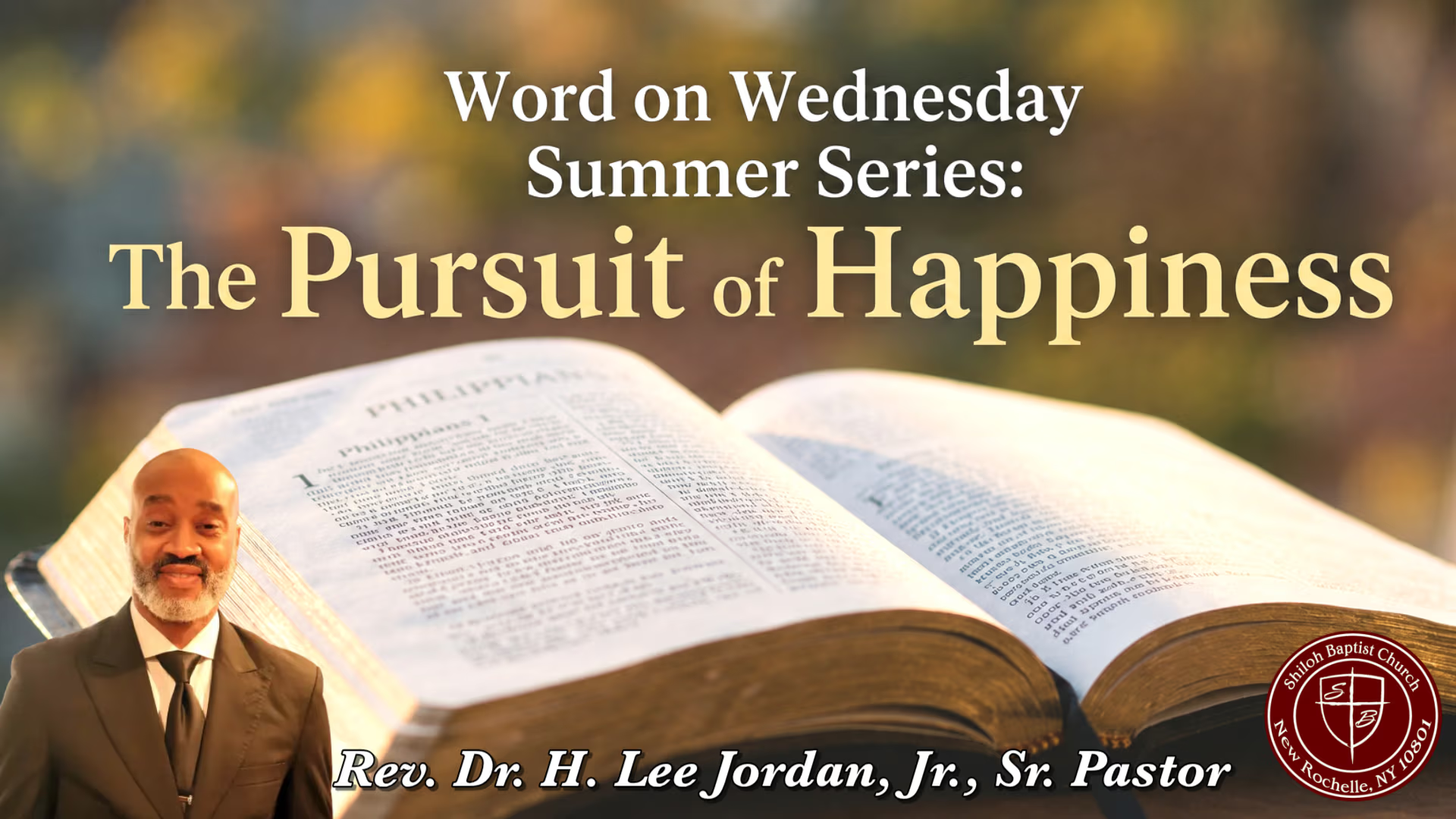
Philippians 1:3-5 (ESV)
3 I thank my God in all my remembrance of you, 4 always in every prayer of mine for you all making my prayer with joy, 5 because of your partnership in the gospel from the first day until now.
- Why is it sometimes easier to hold on to painful memories than to replace them with good ones?
One of the greatest battles we fight isn’t against people, it’s against our memories.
When Paul wrote his letter to the Philippian church, he wasn’t writing from a vacation resort. He was writing from prison. Yet instead of rehearsing the pain of his past, he rehearsed the faithfulness of God and the partnership of God’s people. Philippi had every reason to be a place Paul wanted to forget. It was there that he was falsely accused, publicly beaten, stripped of his dignity, chained in a prison cell, and forced to leave the city (Acts 16). If anyone had the right to define Philippi by suffering, it was Paul.
But Paul refused to let his worst experiences become his strongest memories.
Instead, he wrote: “I thank my God every time I remember you… because of your partnership in the gospel.” (Philippians 1:3-5)
I. Gratitude rewrites the narrative of pain.
Paul didn’t deny what happened, he simply refused to let suffering have the final word. His gratitude became greater than his grief. Too often we replay offenses until they become the soundtrack of our lives. Every replay deepens the wound. Every rehearsal strengthens the resentment.
But gratitude changes the story. It shifts our focus from what people did to us to what God did through us.
II. What you rehearse determines what rules your heart.
The mind is like fertile soil. Whatever you continually plant there will eventually grow. If you continually replay betrayal, bitterness grows. If you continually replay disappointment, discouragement grows.
But if you continually remember God’s faithfulness and the blessings He has placed in your life, joy begins to flourish. Guard your heart, by guiding your memories!!!
Paul guarded his heart by guarding his memories.
III. Forgiveness remembers differently.
Forgiveness is not pretending the hurt never happened. Forgiveness is choosing not to let yesterday’s wounds rob today’s relationships.
Clara Barton, founder of the American Red Cross, was once reminded of a terrible wrong someone had committed against her. When asked, “Don’t you remember?” she replied, “No, I distinctly remember forgetting it.”
That is not selective amnesia, that is spiritual maturity. Forgiveness is the decision that pain will no longer control your perspective.
IV. Healthy relationships grow where grateful hearts live.
The longer we know people, the easier it becomes to notice their flaws instead of their faithfulness.
We begin keeping records of offenses instead of records of grace. But Paul teaches us a better way.
He thanked God for the people who stood beside him. He celebrated their partnership rather than dwelling on their imperfections. Relationships flourish when gratitude becomes our first response instead of criticism.
In closing, God never asks us to deny our pain, but He does invite us to let His grace become greater than our memories.
- Choose the memory that builds you, instead of the memory that breaks.
Published on Wednesday, July 15, 2026 @ 3:31 AM EDT
0 comments